Introduction: Why Green Home Rebates Matter
Upgrading your home with energy-efficient technology not only lowers your monthly bills, it can also qualify you for rebates that put money back in your pocket. From heat pumps to smart thermostats, governments and utilities are offering big savings for homeowners who make the switch to greener technology.
In this guide, we’ll cover which upgrades qualify, how rebates work, and how you can stack them with tax credits and a SmartEnergy renewable plan for maximum benefit.
1. What Counts as a Green Home Upgrade?
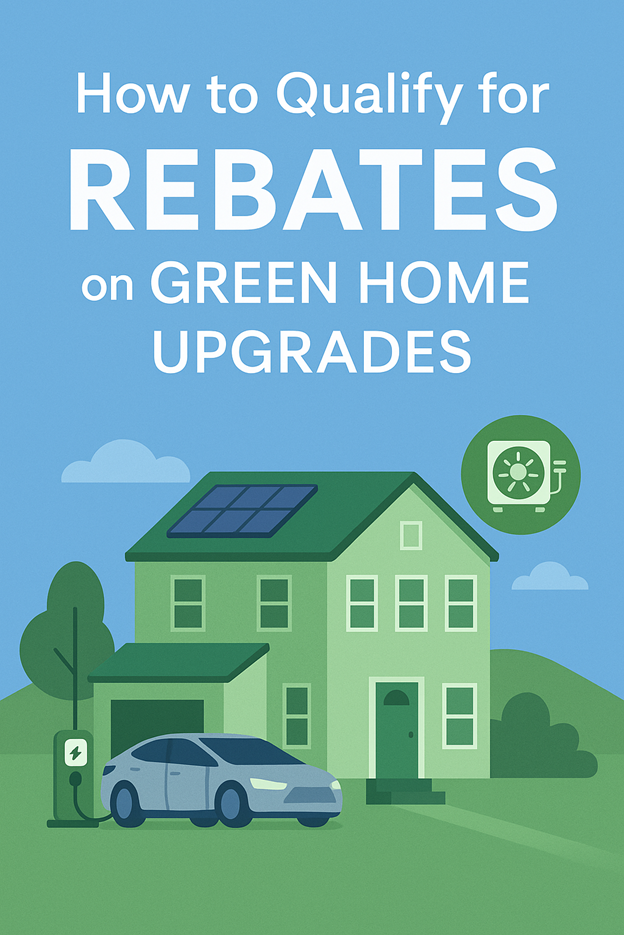
Most rebate programs cover improvements that increase efficiency or replace fossil-fuel systems. Common qualifying upgrades include:
- Heat pumps (air source and ground source)
- High-efficiency HVAC systems
- Smart thermostats and energy monitoring devices
- Insulation, windows, and doors
- Water heaters (heat pump or solar)
- EV charging stations
👉 Tip: Many rebates have efficiency rating requirements — always check for ENERGY STAR® or program-certified models.
2. Federal Rebates Available in 2025
The Inflation Reduction Act (IRA) introduced two major rebate programs:
- HOMES Rebate Program
- Rewards whole-home energy savings (based on modeled or measured performance).
- Larger incentives available for low- and moderate-income households.
- Rewards whole-home energy savings (based on modeled or measured performance).
- High-Efficiency Electric Home Rebate (HEEHRA)
- Up to $8,000 for heat pumps, $1,750 for heat pump water heaters, and more.
- Income-based eligibility ensures support for households most in need.
- Up to $8,000 for heat pumps, $1,750 for heat pump water heaters, and more.
👉 Official Source: Energy.gov – Rebates and Tax Credits
3. State & Utility Rebates
Each state and utility offers its own programs, which often stack with federal incentives. Examples include:
- Mass Save (MA): Rebates on heat pumps, insulation, and EV chargers.
- EmPOWER Maryland: Discounts on appliances and home upgrades.
- Efficiency Maine: Rebates for insulation, heat pumps, and EVs.
- Oncor (TX): Rebates for home efficiency upgrades.
👉 See our State Incentives Guide for a full breakdown by state.
4. How to Qualify for Rebates
- Check Eligibility First – Confirm income requirements, equipment specs, and program deadlines.
- Work With Approved Contractors – Many rebates require installation by certified professionals.
- Save All Documentation – Keep receipts, serial numbers, and installation certificates.
- Apply Quickly – Some programs are capped annually and operate on a first-come, first-served basis.
5. Stacking Rebates With Tax Credits
You don’t have to choose between rebates and tax credits — most programs allow you to use both. Example:
- Install a heat pump → claim a federal tax credit (up to $2,000) plus a state rebate (up to $8,000).
👉 Combine with a SmartEnergy renewable electricity plan for predictable rates.
6. The Bottom Line
Government and utility rebates make upgrading your home more affordable than ever. Whether you’re installing a heat pump, adding insulation, or setting up EV charging, these programs can cut thousands off your project costs.
👉 Check SmartEnergy’s renewable plans today and make your rebates go even further.